Download
News
Jul.17
2026
What Makes ISO Tank Containers Different from Standard Tank Trucks?
The logistics and transportation industries have seen revolutionary advancements with the introduction of ISO tank containers. These specialized containers are designed to transport bulk liquids efficiently and securely. Unlike standard tank trucks, ISO tank containers optimize space, reduce transportation costs, and minimize the risk of contamination, which is especially crucial for industries

Jul.16
2026
What Are ISO Tank Containers Used for in International Transport?
In today\'s globalized economy, the need for efficient and safe transport of liquids is paramount. ISO tank containers have emerged as a key solution, enabling seamless international transport for various industries. These specialized containers are designed for safely transporting hazardous and non-hazardous liquids, such as chemicals, food products, and petrochemicals. With increasing demand for
Jul.15
2026
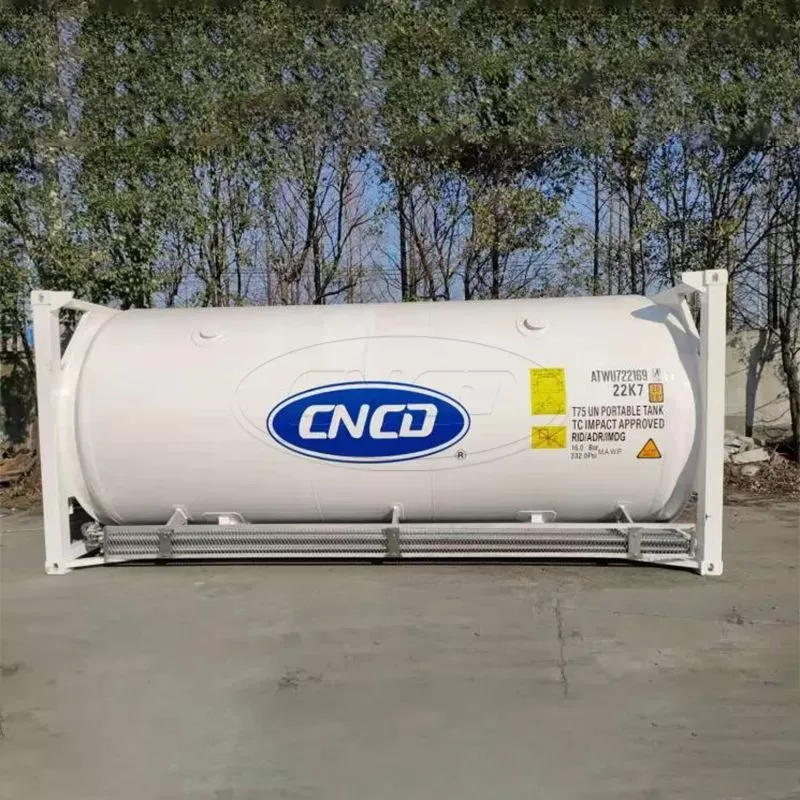
What Is an ISO Tank Container and How Does It Work?
ISO Tank Containers are essential in the logistics and transportation industry, serving a pivotal role in the safe and efficient movement of liquids and gases. With an exponential rise in global trade, the need for effective shipping solutions has seen a remarkable 20% surge in demand for ISO tanks over the past five years. These containers minimize the risk of contamination and ensure compliance
Jul.14
2026
Cryogenic Storage Solutions for Energy Transition Projects
There are three main types of cryogenic storage tanks:
Jul.13
2026
Cryogenic Liquid Storage Tanks in Shipyards and Marine Facilities
Cryogenic liquid storage tanks play a vital role in shipyards and marine facilities. These tanks store liquefied gases at very low temperatures, ensuring that they remain in liquid form. The challenge many facilities face is ensuring these tanks operate safely and efficiently. Understanding the right types of tanks and storage systems can significantly improve safety and efficiency. Topics like
Related Products


Air Ambient vaporizer this series of vaporizer uses the highly efficient star-shaped aluminum alloy fin as its main body heat transfer meter.

This liquid carbon dioxide pump can be applied in the pressurizing and filling of liquid carbon dioxide.

Liquefied Gas Transport Semi-Trailer
Liquefied gas transport semi-trailers can be used to transport various liquefied gases and can be designed and modified according to customer needs.

Cryogenic Liquid Storage Tanks
Cryogenic liquid storage tanks are containers specifically designed for storing substances at extremely low temperatures (typically below -150°C). These tanks are crucial for storing liquefied gases such as liquid oxygen, liquid nitrogen, liquid argon, liquid carbon dioxide, liquid hydrogen, and liquid helium (LNG).

Cryogenic Liquid Storage Tanks (LCO2)
Liquid carbon dioxide storage tank can be classified into polyurethane foaming insulation tank and the vacuum powder adiabatic tank, with a designed working temperature of minus 40 ℃, Its main material can be OCr18Ni9 or 16MnDR according to the different working condition.
RELATED PROJECT

The important components of the Midea project in Thailand are the production, installation and construction of multiple storage tanks, buffer tanks and vaporizers.

Civil-Military Integration